Skip to content
-
Subscribe to our newsletter & never miss our best posts. Subscribe Now!
Life Stories
Life Stories
  • Home
  • News
  • Jokes
  • Curiosities
  • Stories
  • Popular
  • Contact Us
  • About Us
  • Terms of Service
  • Privacy Policy
  • Home
  • News
  • Jokes
  • Curiosities
  • Stories
  • Popular
  • Contact Us
  • About Us
  • Terms of Service
  • Privacy Policy
Close

Search

  • https://www.facebook.com/
  • https://twitter.com/
  • https://t.me/
  • https://www.instagram.com/
  • https://youtube.com/
Subscribe
Curiosities

The History and Legacy of the Guillotine Paper Cutter: A Timeless Office Tool

By Sophia Reynolds
April 3, 2025 4 Min Read
0

In today’s digital age, paper cutting is often something we take for granted. Whether it’s trimming documents, cutting out shapes, or preparing materials for a presentation, most of us rely on automatic or electric cutters. However, in the past, manual devices like the guillotine paper cutter were highly popular and widely used. These classic devices were known for their sharp precision and ability to cut through large stacks of paper with ease. Let’s dive into the fascinating history and lasting impact of the guillotine paper cutter.

The Invention and History of the Guillotine Paper Cutter

The guillotine paper cutter, also called the paper shear, has its origins in the early 19th century. It was invented by French engineer Guillaume Massiquot, who patented the device in 1844. The design of the guillotine paper cutter was inspired by the earlier guillotine used for executions, with Massiquot adapting the principle to cut paper. The cutting mechanism involved a sharp, heavy blade mounted on a lever arm, which could be pulled down to slice through paper with incredible accuracy and efficiency.

The timing of its invention couldn’t have been better. During the mid-1800s, industries such as publishing and printing were rapidly expanding, and there was an increasing demand for precise and quick paper cutting. The guillotine paper cutter revolutionized the way businesses handled paper, making it possible to cut through large stacks with ease, drastically improving productivity.

How the Guillotine Paper Cutter Was Used

Throughout the 19th and 20th centuries, the guillotine paper cutter became a staple in offices, print shops, and bookbinding studios. The primary function of the cutter was to slice large stacks of paper into uniform sizes, an essential task in industries such as printing, where consistency and precision were paramount.

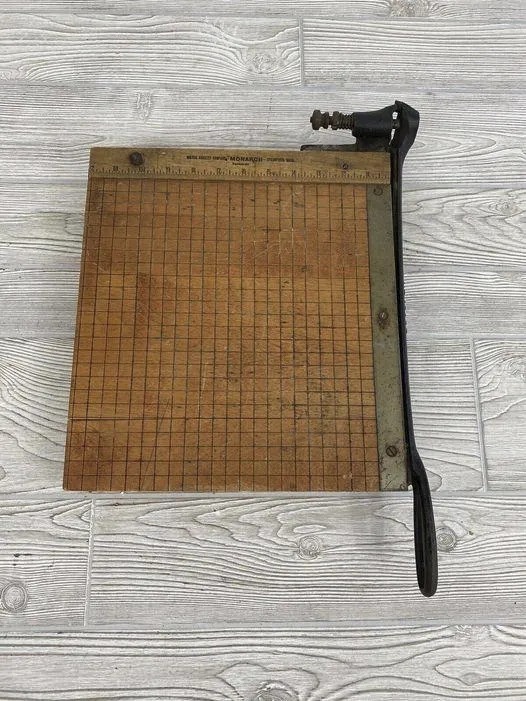
The cutter typically featured a sturdy base, often made of wood or metal, with a built-in ruler for measuring paper. A clamping mechanism held the paper stack in place, ensuring the sheets didn’t shift during cutting. The most notable feature, however, was the long levered blade. The operator would pull down on the lever, which would cause the sharp blade to come down swiftly and cleanly, slicing through the paper with minimal effort.

The guillotine paper cutter was praised for its ability to handle multiple sheets at once, making it far more efficient than using a simple hand-held scissor or knife. This ability to cut through large quantities of paper at a time made it an essential tool for industries that required large-scale paper processing.

The Guillotine Cutter’s Enduring Legacy

Although many modern offices have moved on to automatic paper cutters and digital printing technology, the legacy of the guillotine paper cutter lives on. Its basic design principles continue to influence contemporary paper cutting machines. Modern cutters still rely on a similar levered blade mechanism, though they often come with added features like safety guards, ergonomic handles, and precision alignment tools.

Vintage guillotine paper cutters have also become sought-after collectibles. Antique enthusiasts and collectors value these devices for their craftsmanship and historical significance. Not only are they a piece of office history, but they also represent the ingenuity of past generations. Some artists and crafters still prefer using vintage guillotines, appreciating the tactile feedback and precision these tools provide compared to their modern counterparts.

The Cultural Impact of the Guillotine Cutter

The influence of the guillotine paper cutter extends beyond the office and into popular culture. The term “guillotine” has become synonymous with sharp precision and decisive action, often used metaphorically in various contexts. For example, phrases like “a guillotine decision” or “a guillotine move” evoke a sense of clear, no-nonsense action, reflecting the cutter’s efficiency and accuracy.

In addition, the guillotine paper cutter’s historical association with the beheading device has lent it a certain dramatic flair in literature and film. In some ways, the cutter’s appearance and use have even influenced the design of other cutting tools or machines in various industries, cementing its place in both cultural history and technological development.

Conclusion: The Timelessness of the Guillotine Paper Cutter

The vintage guillotine paper cutter is a perfect example of how an everyday tool can evolve into a symbol of both utility and historical significance. Its original purpose of cutting large stacks of paper has made it an enduring icon in the world of office equipment and design. While newer, automated devices have taken over in many workplaces, the guillotine paper cutter continues to capture the imagination of collectors, artists, and enthusiasts alike.

Its legacy is a reminder of the incredible innovation that took place in the past, as well as a testament to the lasting impact of practical design. Whether you’re using a modern paper cutter or admiring a vintage one, the guillotine shear is a fascinating piece of history that still influences the way we cut paper today.

Sophia Reynolds

Sophia Reynolds is a dedicated journalist and a key contributor to Storyoftheday24.com. With a passion for uncovering compelling stories, Sophia Reynolds delivers insightful, well-researched news across various categories. Known for breaking down complex topics into engaging and accessible content, Sophia Reynolds has built a reputation for accuracy and reliability. With years of experience in the media industry, Sophia Reynolds remains committed to providing readers with timely and trustworthy news, making them a respected voice in modern journalism.


Author

Sophia Reynolds

Sophia Reynolds is a dedicated journalist and a key contributor to Storyoftheday24.com. With a passion for uncovering compelling stories, Sophia Reynolds delivers insightful, well-researched news across various categories. Known for breaking down complex topics into engaging and accessible content, Sophia Reynolds has built a reputation for accuracy and reliability. With years of experience in the media industry, Sophia Reynolds remains committed to providing readers with timely and trustworthy news, making them a respected voice in modern journalism.

Follow Me
Other Articles
Previous

The Surprising Value of $2 Bills: You Might Have a Hidden Treasure!

Next

What Was That in My Food? Understanding RFID Trackers in Meat Products

No Comment! Be the first one.

Leave a Reply Cancel reply

Your email address will not be published. Required fields are marked *

  • Doctors Gave Up After 10 Years in a Coma—Until a Little Girl Did the Unthinkable
  • A Little Girl Saw a Homeless Woman Freezing in the Snow—Then Said Words That Changed Both Their Lives Forever
  • He Changed the Locks on My Parents’ Dream Home—But One Document Took It All Back
  • She Was Just Waiting in a Hospital Hallway—Until One Quiet Whisper Saved a Boy’s Life
  • A 7-Year-Old Girl Whispered, “He’s Getting Lighter Every Day”… What Rescuers Discovered About Her Baby Brother Shocked Everyone

Archives

  • April 2026
  • March 2026
  • February 2026
  • December 2025
  • September 2025
  • July 2025
  • June 2025
  • May 2025
  • April 2025
  • March 2025
  • February 2025

Categories

  • Curiosities
  • Jokes
  • News
  • Popular
  • Stories
  • About Us
  • Contact Us
  • Privacy Policy
  • Terms of Service
Copyright 2026 — Life Stories . All rights reserved. Blogsy WordPress Theme