Visual puzzles have a strange kind of power.
In just a few seconds, they pull you in, challenge your thinking, and make you question what you see. At first glance, everything seems obvious—but the truth is often hiding in the smallest detail.
These kinds of challenges aren’t just मनोर मनोर—they sharpen your focus, test your logic, and push you to slow down in a world that constantly rushes you.
The Challenge
Imagine a frozen scene.
Three people lie completely still.
No movement. No sound. No clear sign of life.
They all look the same at first glance.
The question is simple:
Which one is still alive?
No tricks. No special knowledge needed.
Just your eyes—and your attention to detail.
Why Most People Get It Wrong
This puzzle isn’t difficult because it’s complicated.
It’s difficult because your brain wants to rush.
We’re wired to make fast decisions.
We scan, assume, and conclude within seconds.
But that’s exactly where the mistake happens.
What looks obvious… usually isn’t.
And what seems unimportant… is often the key.
Look Closer
Take a moment.
Don’t rush.
Look again—carefully.
The Hidden Clue
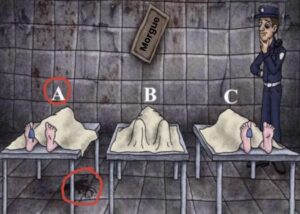
The correct answer is:
Stretcher C.
At first, nothing stands out.
But beneath the stretcher, there’s a small detail most people miss:
Blood is still flowing onto the floor.
That changes everything.
Flowing blood means circulation.
Circulation means the heart is still pumping.
And that means—
the person is still alive.
What looks alarming at first…
is actually the only sign of life in the entire scene.
What This Puzzle Teaches You
This isn’t just a game.
It’s a reminder.
First impressions can fool you.
Fast thinking can mislead you.
And sometimes, the truth hides in places you almost ignore.
If you slow down—even for a few seconds—you start to see differently.
More clearly.
More accurately.
Train Your Mind to See More
Puzzles like this are more than entertainment.
They’re mental training.
They help you:
- Notice details others miss
- Think before jumping to conclusions
- Stay calm and analytical under pressure
And over time, that skill doesn’t just help with puzzles—
It helps in real life too.
Because sometimes…
the difference between being wrong and being right
is simply taking a second look.
